
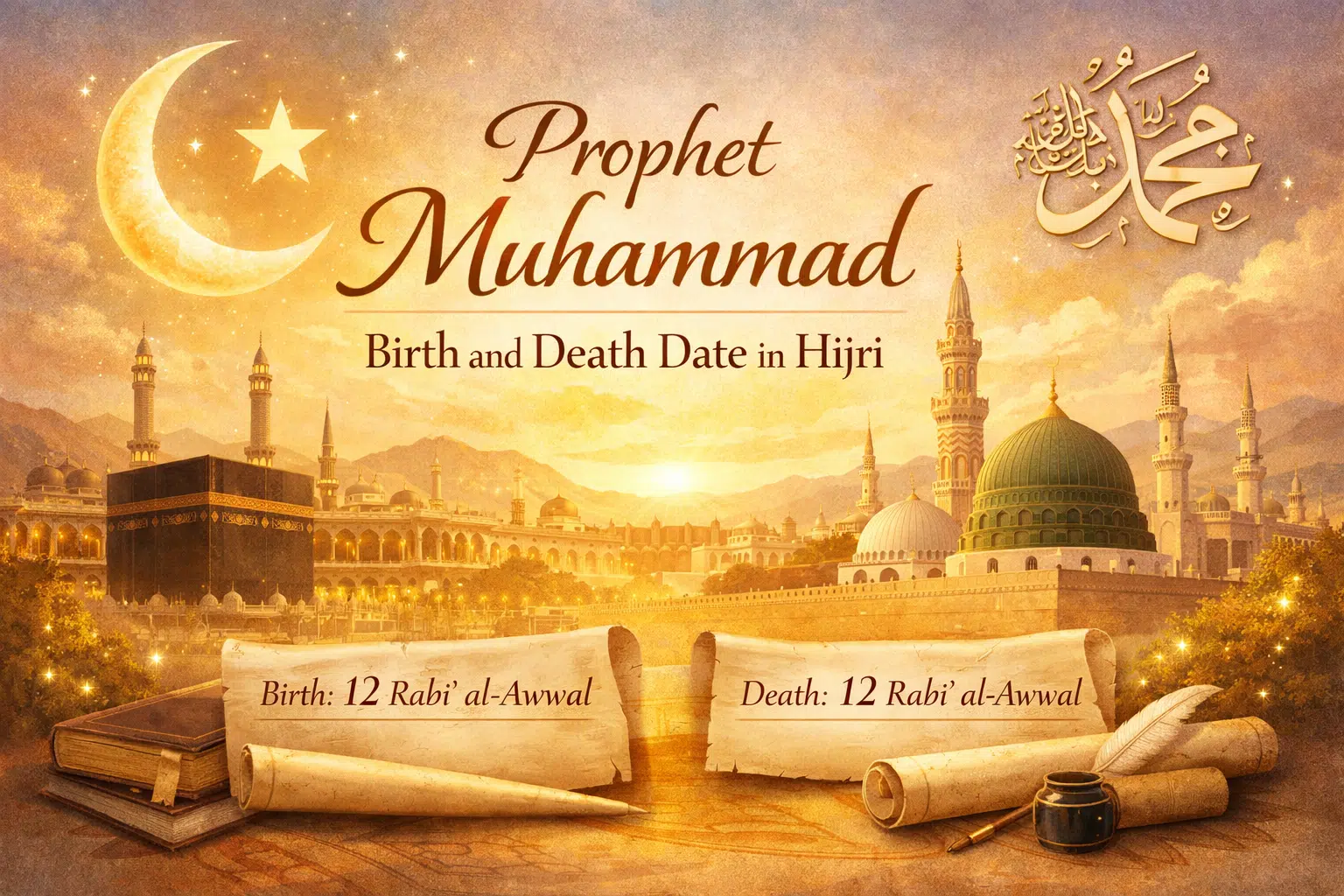
Prophet Muhammad’s Birth And Death Dates In Hijri
Prophet Muhammad ( ﷺ ) is the final messenger of the Islamic religion who has left a legacy in the lives of millions of people in the world with his life and teachings. Muslims should be aware of the exact dates of his birth and death by the Hijri calendar because they can use these dates to celebrate his legacy by organizing such events as Mawlid al-Nabi.
In this guide, I will present the date of birth and death of Prophet Muhammad (ﷺ) based on the Hijra calendar, historical background, and meaning.
Birth of Prophet Muhammad (ﷺ)
12th Rabi’ al-Awwal – The Blessed Birth
Prophet Muhammad (ar) was born on 12 th Rabi al-Awwal, 53 BH (Before Hijra), or 570 CE, according to the Gregorian. He was born in Mecca, present-day Saudi Arabia. It is also referred to as the Year of the Elephant since the army of Abraha tried to invade Mecca, but they were unsuccessful.
His birth is also marked by the Muslims in the Mawlid al-Nabi, to remind the faithful of the benevolent and righteous character of his life and his teachings.
History behind the Birth.
The social, political, and religious issues of the time Prophet Muhammad (ar) was born were characterized by them. Arabia was subdivided into tribes, and war was perpetual among them, along with idolatry and social injustice. The beginning of a great change was his birth, which would later change history.
The conditions of his birth pointed out the motives of endurance, pardon, and heavenly direction, which were the main ones of his life.
Significance of 12th Rabi’ al-Awwal
The 12 th of Rabi-ul-Awal is quite important to Muslims everywhere in the world. Though the specialized practice may differ in different Islamic traditions, this day is generally observed as a reminder of the message of the Prophet, whereby the primary emphasis is on peace, justice, and compassion.
Muslims honor this date with:
- Peculiar prayers and Quran recitations.
- Educational events on the life of the Prophet.
- In his name, charity work.
- Social gatherings and the recital of his doctrine.

Death of Prophet Muhammad (ﷺ)
12th Rabi’ al-Awwal, 11 AH – Wafat
Prophet Muhammad ( ﷺ ) passed away on the 12 th of Rabi al Awwal, 11 AH, or 632 CE according to the Gregorian calendar. His death took place in Medina, where he had established the Muslim colony, having left Mecca.
It was also believed that his birth and death on 12 th Rabi al Awwal is terribly symbolic as well because it is the date when it is said that his earthly journey ended and the spiritual heritage of his work, which has lasted until now.
Historical Background of His Passing
During the final days of Prophet Muhammad (ﷺ):
- He had a few days in bed, and his successors.
- He taught his followers to practice prayer, charity, and justice.
- He also insisted that they come together and embrace the teachings of Islam.
His assassination was a radical shift in the history of Islam. His teachings and instructions continue to pass through millions of people all over the world, even in his physical absence
Significance of the Death Date
The death of the Prophet Muhammad (ﷺ), is a day that makes people reflect on the teachings and contributions of a prophet.
- Memorization of the Quran.
- Reflect on his life experience.
- Advice and blessing prayer.
- Community remembrance sessions
His birth and death on the same day in the Hijra are considered one of the divine signs of the completion and fulfillment of his mission.

How Hijri Dates are Calculated
The Hijri calendar is a lunar calendar, which is computed based on the moon cycles. The thing is that the number of days in the Islamic calendar year is about 10-12 days lower than the Gregorian calendar year.
- Birth: 12 Rabi’ al-Awwal, 53 BH → 570 CE
- Death: 12 Rabi’ al-Awwal, 11 AH → 632 CE
The Islamic events are observed in the world over, depending on the moon sightings, because of the lunar nature.
Observing Mawlid al-Nabi
Global Celebrations
Muslims all over the world commemorate the birth of Prophet Muhammad ( ﷺ):
- The celebrations of Saudi Arabia are also less glamorous and are more directed towards religious teachings.
- Mawlid al-Nabi is celebrated by the countries of the world, including Pakistan, India, and Egypt, in the form of processions, education, and the life stories of the Prophet.
Spiritual Significance
Observing this day helps Muslims:
- Improve their connection with Prophet Muhammad (ﷺ).
- Re-find their allegiance to compliance with Islamic values.
- Disseminate the message of peace, justice, and compassion.
Frequently Asked Questions (FAQs)
On what day was the Hijri birthday of Prophet Muhammad?
He was born on 12 th Rabi al-Awwal, 53 BH, and he was very glad that it was Mawlid al-Nabi.
At what time did Prophet Muhammad die?
He passed away on 12 th Rabi al-Awwal 11 AH in Medina and has
Why are the birth and death on the same Hijra day?
The coincidence means the fulfillment of his divine mission and is considered to be an important spiritual symbolism in the history of Islam.
What are Gregorian and Hijri dates?
The Hijra calendar relies on the lunar system; each year has a new date as opposed to the Gregorian solar calendar.
Read more: Best Supplications for Qiyam al-Layl (Arabic Guide)
Final Words
Information on the birth and death dates of Prophet Muhammad (ﷺ) in Hijri helps Muslims identify themselves with their religion and reflect on the Islamic teachings. 12th Rabi al- Aawwal is a day of remembrance and reflection and the celebration of the life and legacy of the Prophet. Even today, when these dates are still inspiring the billions of people around the world, whether they are observed on the celebrations of Mawlid al-Nabi or when they are observed at the silent time of reflection and prayer.
This process of remembrance of the life and teachings of Prophet Muhammad (ﷺ) assists Muslims to be more obedient, to achieve justice, and pursue the road of mercy and peace that Prophet Muhammad showed.